
Which Stand-Up Comedian Should You Watch?
Looking for the best stand-up comedians but not sure where to start? The answer depends on what makes you laugh.
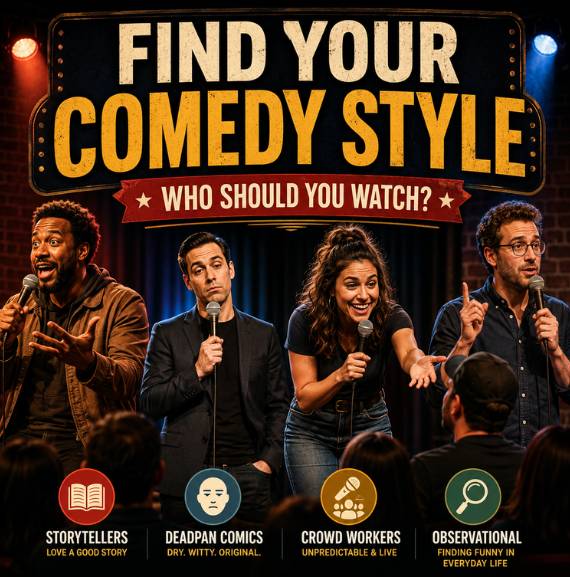
Some comedy fans love long stories that slowly build toward an unforgettable punchline. Others prefer sharp one-liners, dark humour, social commentary, crowd work or high-energy performances. There is no single comedian who is perfect for every comedy fan.
So instead of another ranking of the greatest comedians of all time, we’ve taken a different approach.
This guide matches some of the best stand-up comedians with the type of comedy they do especially well. Whether you’re discovering stand-up for the first time or looking for something different to watch, start with the style you enjoy most.
If you’d like to learn more about the genres themselves, read our guide to the different styles of stand-up comedy.
Best Stand-Up Comedians by Comedy Style
| If You Like… | Start With |
|---|---|
| Storytelling | Richard Pryor |
| Observational Comedy | Jerry Seinfeld |
| Social Commentary | George Carlin |
| Crowd Work | Jeff Arcuri |
| Dark Comedy | Anthony Jeselnik |
| One-Liners | Steven Wright |
| High-Energy Comedy | Robin Williams |
| Argumentative Comedy | Bill Burr |
| Physical Performance | Eddie Murphy |
| Personal Storytelling | Mike Birbiglia |
| Relationships and Modern Life | Taylor Tomlinson |
| Cultural and Family Comedy | Ali Wong |
| International Comedy | Trevor Noah |
| Deadpan Comedy | Norm Macdonald |
| Roast and Insult Comedy | Don Rickles |
These aren’t rankings. Many comedians work across several styles, but each selection is a strong starting point for exploring that type of stand-up.
Best for Storytelling: Richard Pryor
If you love comedians who can turn a personal experience into an entire world, start with Richard Pryor.
Pryor could move between characters, voices, painful memories and absurd observations while making the performance feel spontaneous. His stories weren’t simply setups designed to reach punchlines. The storytelling itself was part of the comedy.
His material about relationships, race, addiction, family and his own mistakes helped make deeply personal storytelling central to modern stand-up.
Watch Richard Pryor if you like: personal stories, characters, vulnerability and comedians who make you feel as though you’re listening to an extraordinary storyteller rather than someone simply delivering jokes.
Best for Observational Comedy: Jerry Seinfeld
If tiny everyday annoyances make you laugh, Jerry Seinfeld is one of the clearest places to start.
Seinfeld built his stand-up around things almost everyone experiences but rarely stops to examine. Restaurants, dating, transportation, social behaviour and ordinary objects can all become material.
His comedy is also useful for people who prefer relatively clean stand-up. Rather than relying heavily on shock value, Seinfeld focuses on wording, rhythm and finding the absurdity hidden inside everyday life.
Watch Jerry Seinfeld if you like: everyday observations, precise joke writing, relatable subjects and cleaner comedy.
Best for Social Commentary: George Carlin
For comedy that makes you think almost as much as it makes you laugh, George Carlin remains essential.
Carlin examined language, politics, religion, consumerism, social rules and the contradictions of human behaviour. He had an unusual ability to take a large idea and break it into funny, memorable observations.
His career also demonstrates how a comedian can evolve. The performer Carlin became later in life was very different from the more conventional comedian who began his career decades earlier.
Watch George Carlin if you like: ideas, language, cultural criticism and comedy that questions why society works the way it does.
Best for Crowd Work: Jeff Arcuri
If your favourite part of a comedy show is watching a comedian interact with people in the room, Jeff Arcuri is a strong modern starting point.
Crowd work depends on listening, reacting quickly and finding comedy in information the performer couldn’t completely plan in advance. Arcuri has become particularly recognizable for clips built around playful conversations with audience members.
Good crowd work creates the feeling that something is happening specifically for that room and will never happen exactly the same way again.
Watch Jeff Arcuri if you like: audience interaction, spontaneity, quick responses and unpredictable live comedy.
Best for Dark Comedy: Anthony Jeselnik
If you enjoy jokes that deliberately lead you somewhere uncomfortable before changing direction, try Anthony Jeselnik.
Jeselnik’s stand-up relies heavily on carefully constructed setups, misdirection and subjects many comedians would avoid entirely. The polished delivery is part of the effect. He often sounds completely calm while delivering something outrageous.
Dark comedy isn’t for everyone, and that’s precisely why this type of guide is useful. If shock, misdirection and uncomfortable subjects make you laugh, Jeselnik may be exactly your style.
Watch Anthony Jeselnik if you like: dark humour, misdirection, carefully written punchlines and comedy that deliberately crosses lines.
Best for One-Liners: Steven Wright
Some comedians need ten minutes to tell a story. Steven Wright can create an entire strange universe in one sentence.
His comedy is built around short jokes, surreal logic and unexpected connections between ordinary ideas. His famously understated delivery makes the absurdity even more effective.
Wright is an excellent choice if you enjoy comedians who treat language almost like a puzzle.
Watch Steven Wright if you like: one-liners, wordplay, surreal observations and economical joke writing.
Best for High-Energy Comedy: Robin Williams
If you want stand-up that feels almost impossible to contain, watch Robin Williams.
Williams could race between impressions, characters, physical movements, observations and improvised ideas at extraordinary speed. His performances often felt as though several comedians were sharing the same body.
That energy made his live comedy particularly distinctive. Even when discussing an ordinary subject, Williams could transform it through voices, characters and physical performance.
Watch Robin Williams if you like: improvisation, impressions, characters, physical comedy and relentless energy.
Best for Argumentative Comedy: Bill Burr
Bill Burr has turned frustration into an art form.
A typical Burr routine can begin with an opinion that sounds completely unreasonable. He argues with himself, anticipates the audience’s objections, changes direction and sometimes discovers that his original position wasn’t quite as defensible as he thought.
That tension between confidence and self-awareness is a major part of his appeal.
Watch Bill Burr if you like: rants, uncomfortable opinions, relationship comedy and comedians who argue their way through an idea.
Best for Physical Performance: Eddie Murphy
At his stand-up peak, Eddie Murphy didn’t simply tell audiences what happened. He performed it.
Characters, impressions, facial expressions, movement and enormous stage presence helped turn his stories into full performances.
Murphy is particularly worth watching for comedy fans interested in how much a comedian can communicate beyond the words of the joke itself.
Watch Eddie Murphy if you like: characters, impressions, swagger, storytelling and highly physical stage performances.
Best for Personal Storytelling: Mike Birbiglia
If you prefer stand-up that feels somewhere between comedy, theatre and memoir, try Mike Birbiglia.
Birbiglia is known for building longer narratives around relationships, family, health, embarrassment and major moments in his life. Individual jokes matter, but they often serve a much larger story.
His shows demonstrate how far stand-up storytelling can stretch beyond a traditional sequence of setups and punchlines.
Watch Mike Birbiglia if you like: long-form stories, vulnerability, theatrical structure and comedy with emotional depth.
Best for Relationships and Modern Life: Taylor Tomlinson
For a contemporary perspective on dating, relationships and adulthood, Taylor Tomlinson is an excellent place to start.
Her stand-up combines tightly structured jokes with personal material about relationships, family, expectations and trying to navigate adult life.
Tomlinson’s appeal comes partly from making personal experiences feel broadly recognizable without losing the specificity that makes them funny.
Watch Taylor Tomlinson if you like: dating comedy, modern relationships, personal material and polished joke writing.
Best for Cultural and Family Comedy: Ali Wong
Ali Wong combines relationships, family, cultural expectations, motherhood and ambition with a deliberately fearless stage persona.
Her comedy can be extremely personal while still connecting with audiences whose lives may look completely different from hers.
That combination makes Wong a strong starting point for viewers who enjoy stand-up rooted in identity and family life without wanting the comedy to become overly sentimental.
Watch Ali Wong if you like: family comedy, relationships, cultural observations and brutally candid personal material.
Best for International Comedy: Trevor Noah
If you enjoy comedy about countries, accents, language and cultural differences, Trevor Noah offers an unusually international perspective.
Growing up in South Africa gave Noah a different frame of reference from many North American comedians. His stand-up frequently examines how people from different countries understand race, politics, language and one another.
His ability to move between accents and perspectives also makes cultural differences part of the performance itself.
Watch Trevor Noah if you like: international perspectives, accents, politics, travel and cross-cultural observations.
Best for Deadpan Comedy: Norm Macdonald
Norm Macdonald could make a joke funnier by appearing almost indifferent to whether the audience understood where he was going.
His unusual timing, deliberately awkward pauses, long setups and refusal to follow predictable joke structures gave him one of the most distinctive voices in stand-up.
Macdonald is especially rewarding for viewers who enjoy comedians who play with the mechanics of joke telling itself.
Watch Norm Macdonald if you like: deadpan delivery, misdirection, anti-comedy, strange stories and unpredictable punchlines.
Best for Roast and Insult Comedy: Don Rickles
Long before roast clips became a major part of online comedy, Don Rickles made insulting practically everyone in the room into an art form.
What made Rickles unusual wasn’t simply that he insulted people. It was his speed, stage control and ability to create the feeling that the entire room was participating in the joke.
His influence remains visible in roast comedy and in performers who build sets around direct audience interaction.
Watch Don Rickles if you like: roasts, insults, audience interaction, fast improvisation and fearless stage presence.
How to Find the Right Stand-Up Comedian for You
If you’re new to stand-up, don’t worry about starting with whoever is supposedly the “greatest.”
Start with the kind of comedy you already enjoy.
If you love stories, try Richard Pryor or Mike Birbiglia. If you like clever observations about everyday life, try Jerry Seinfeld. If you enjoy darker material, Anthony Jeselnik may be a better fit. If spontaneous audience interaction is what makes you laugh, explore crowd-work comedians.
You may also discover that your favourite comedians combine several styles. Richard Pryor was a storyteller, character performer and social observer. George Carlin mixed observational comedy with social commentary. Robin Williams combined improvisation, physical comedy, characters and storytelling.
Comedy styles aren’t rigid categories. They’re better thought of as tools comedians combine to create their own voices.
What Should You Watch First?
- Want a comedy legend? Start with Richard Pryor or George Carlin.
- Want something observational? Try Jerry Seinfeld.
- Want something dark? Try Anthony Jeselnik.
- Want great storytelling? Try Richard Pryor or Mike Birbiglia.
- Want crowd work? Try Jeff Arcuri.
- Want high energy? Watch Robin Williams or Eddie Murphy.
- Want modern relationship comedy? Try Taylor Tomlinson or Ali Wong.
- Want an international perspective? Try Trevor Noah.
- Want deadpan comedy? Try Norm Macdonald.
- Want classic insult comedy? Watch Don Rickles.
Best Stand-Up Comedians vs. Funniest Comedians of All Time
There is an important difference between finding the best stand-up comedian for your taste and trying to rank the funniest comedians in history.
This guide is designed to help you discover comedians based on what you enjoy. It isn’t intended to determine whether Jerry Seinfeld is “better” than Richard Pryor or whether George Carlin should rank above Robin Williams.
If that’s the debate you’re looking for, see our editorial ranking of the funniest stand-up comedians of all time.
And if you’d rather start with one great performance instead of one comedian, explore our ranking of the best stand-up comedy specials of all time.
Discover Stand-Up Comedy Live
Watching specials is one of the easiest ways to discover comedians, but stand-up was created to be experienced in a room with an audience.
A live show can also introduce you to comedy styles you wouldn’t normally choose at home. A showcase might feature a storyteller, an observational comedian, a one-liner comic and a crowd-work performer on the same bill.
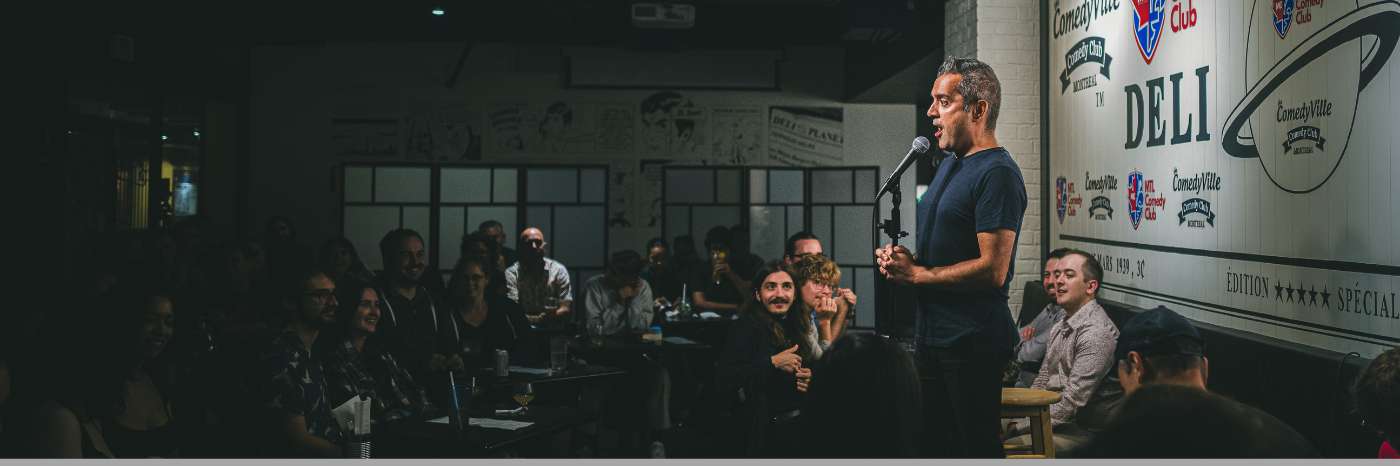
Comedyville presents professional and emerging comedians in downtown Montreal. See our upcoming comedy shows in Montreal and discover which style makes you laugh the most.
Frequently Asked Questions About the Best Stand-Up Comedians
Who are the best stand-up comedians to start with?
Richard Pryor, George Carlin, Jerry Seinfeld, Robin Williams and Eddie Murphy are strong starting points for exploring different eras and styles of stand-up. Modern viewers may also enjoy comedians such as Bill Burr, Taylor Tomlinson, Ali Wong and Trevor Noah.
Who is the best stand-up comedian for storytelling?
Richard Pryor is one of the most influential stand-up storytellers in comedy history. Mike Birbiglia is another excellent choice for viewers who enjoy longer, carefully structured personal stories.
Who are the best observational comedians?
Jerry Seinfeld is one of the best-known observational comedians, while George Carlin also used observation extensively as part of his broader social commentary.
Who should I watch if I like dark comedy?
Anthony Jeselnik is a strong starting point for dark stand-up because of his use of misdirection, taboo subjects and carefully constructed punchlines.
Who are some good crowd-work comedians?
Jeff Arcuri is a popular contemporary example of audience-driven comedy. Crowd work is also common in comedy clubs, where comedians can build spontaneous material from conversations with people in the room.
Where can I see different styles of stand-up comedy live?
Comedy clubs and showcase shows are excellent places to discover different comedy styles because several comedians may perform on the same bill. Comedyville presents live stand-up shows featuring professional and emerging comedians in downtown Montreal.
Post by Eddie Case, exclusively for Comedyville.ca, All rights reserved.
Comedyville is a Comedy Club located in Downtown Montreal.
 Previous Post
 Next Post